The Amenity List Is Not the Whole Stay
Check hotel amenities for access, location and practical fit before booking, so the facilities you need are available at the point in your stay you need them.
A hotel amenity list can look impressive and still tell you little about how useful its facilities will be during your stay. To judge hotel amenities properly, check when you can use them, where they are, and whether they fit the plans you already have. A pool is not much help before an early departure if it opens later; a kettle matters more when you expect a quiet morning in your room.
The useful question is not how many facilities appear on the page. It is whether the right ones will be available at the point in your day when you need them. Make that assessment before booking, using the hotel’s current information and a short enquiry where a detail is unclear.
Start with your plans
Write down the shape of the stay before browsing facilities. Note when you expect to leave and return, which activities are fixed, and where you will spend unplanned time. A conference visit, a family break and a night between trains create different requirements, even if each guest is looking at the same hotel.
Separate needs from pleasant extras. A place to dry a coat may matter after a wet walk; a cocktail bar may not, if you plan to eat elsewhere. This is not an argument against a nice extra. It is a way to avoid letting a photograph of one distract from a practical need.
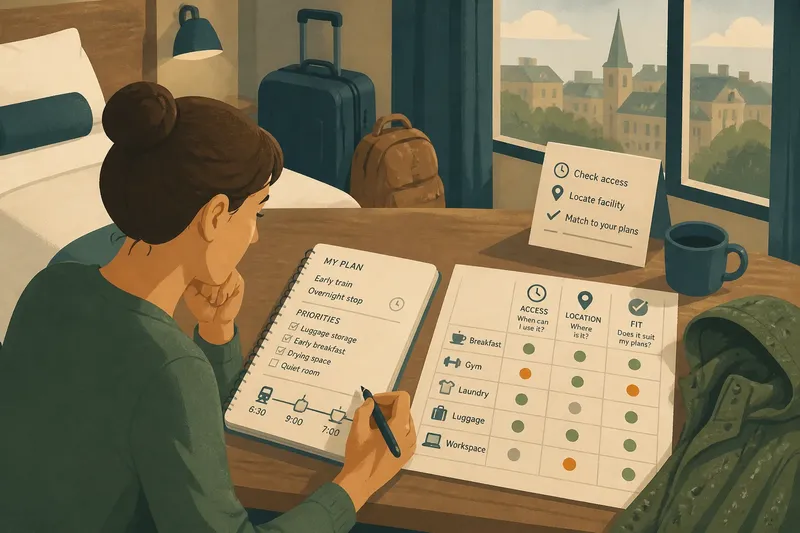
Then list the facilities that could change your decision. Keep the list short enough to use: perhaps breakfast, luggage storage, a gym, a pool, laundry, a lift or a workspace. For each, write when you would use it and what would make it useful. “Gym” is vague; “a place for a short workout before leaving” gives you something to check.
Check access first
A facility’s existence does not tell you whether you can use it. Look for opening hours, booking requirements, access restrictions, closures during your dates and any distinction between facilities included with the room and those available by arrangement. Hotel websites sometimes place these details on separate pages, so check the facility page as well as the room description.
Consider the edges of your day. If you expect to arrive late, confirm whether food, reception assistance or luggage storage is available at the time you need it. If breakfast is listed, check its serving window against your departure. A facility can be entirely real and still miss your schedule by an hour that matters.
Check the hotel’s current terms for the specific facility: its opening hours, whether guests need to reserve, and whether access is included with your room. Ask a direct question if the answer affects your booking. “Is the pool open during my dates, and can guests use it before breakfast?” is more useful than “Do you have a pool?”
Locate each facility
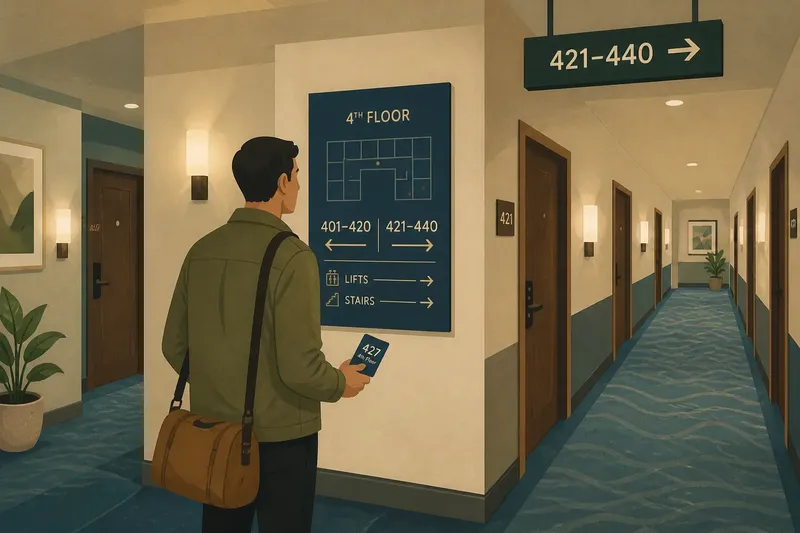
Next, find out where the amenity is in relation to your room and the places you will visit. A restaurant in the building may be convenient, but a shared lounge across a separate entrance may be less useful with a sleeping child. A gym on another floor might suit a guest who wants a destination; someone hoping for a quick session between meetings may prefer easy access.
Use the hotel’s floor plan, room descriptions and photographs where available. Look for signs that a facility is in a separate building, open to the public, or reached through an area that may close. If a listing says “nearby”, ask how the hotel defines nearby and whether access is provided by the hotel or another business.
Placement also affects sound and privacy. A room beside a function space or above a late-opening bar may suit a guest who expects to be out, but not one who plans to work or sleep early. If quiet is a priority, ask about room location rather than treating the presence of a lounge as a benefit or a drawback in itself.
Match details to use
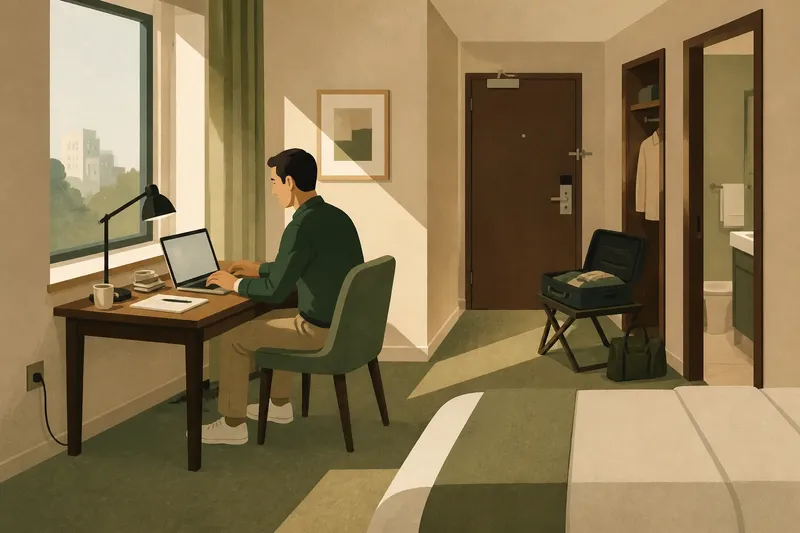
For each facility, ask what it lets you do. A workspace may mean a desk in the room, a table in a shared area, or simply a lobby with seats. Laundry may mean an in-house service, a self-service room, or a nearby launderette. These options are not interchangeable when you are working to a particular routine.
Check the details that change usability: whether breakfast can be taken away, whether luggage can be stored after checkout, whether a shared kitchen has cooking equipment, and whether the room has the items you need rather than access to them somewhere else. If you rely on a particular arrangement, get a clear answer before booking; a broad amenity label can cover several quite different services.
Say you are planning an invented overnight stop before a morning train, with a damp walking coat and no time for breakfast in the dining room. You check whether the hotel accepts luggage after checkout, whether there is a place to hang wet clothing, and whether breakfast can be packed or served early. If luggage storage and a suitable breakfast option are confirmed but no drying space is available, you can decide whether carrying the coat is acceptable or whether another hotel better fits the morning. The answer is a concrete booking choice, not a tally of facilities you will not use.
Compare useful details
When comparing hotels, place the relevant details side by side rather than counting amenity icons. For each candidate, note access, location and fit with your plans. Mark unknowns as unknown, not as yes. That distinction prevents an attractive listing from quietly supplying its own answers.
- Breakfast: Check the serving window, location and whether an early or takeaway option is available. If it fits your departure, keep it as a useful option; if not, ask about an alternative or plan to eat elsewhere.
- Pool or gym: Check opening times, reservation requirements and whether access is limited during your dates. If you can use it at the time you intend, count it as a fit; if not, disregard it or ask about another access time.
- Laundry: Find out whether the hotel offers a service, self-service facilities or only a local recommendation. If the available option suits your schedule, retain the hotel; if not, check a nearby launderette or consider another property.
- Luggage storage: Confirm when it is available and whether it covers the time between checkout and departure. If the hours cover your gap, the arrangement fits; if they do not, ask about another option or plan to keep your bags with you.
- Workspace: Check whether it is in the room or shared, and whether its location suits the work you expect to do. If it provides the privacy and access you need, count it; if not, look for a room with a desk or another suitable place.
- Food and drink: Check when the outlet operates and whether it is part of the hotel or a separate venue. If its hours match your plans, keep it in the comparison; if not, identify another place to eat or remove it from the decision.
Do not treat every missing answer as a reason to reject a hotel. Decide which unknowns matter, then contact the property about those. A brief message with your dates and the specific point you need clarified is usually easier to answer than a general request to describe the amenities.
Questions worth asking?
Does a listed amenity come with every room?
Not necessarily: the listing may describe a shared facility, a service with conditions, or an option available only in certain room types. Check the room details and ask the hotel if the distinction affects your choice.
How can I check whether an amenity is open?
Look for dates, hours and booking notes on the hotel’s current facility information, then confirm anything unclear for your stay. Older photographs or a general property description may not reflect current access.
Should I pay more for a hotel with more amenities?
Only if the additional facilities serve a need or preference that matters to your plans. Compare the specific services you expect to use, rather than treating a longer list as evidence of a better fit.
What if the hotel does not answer my question?
Decide whether you are comfortable booking without that information. If the detail is essential, choose a property whose terms are clear or whose arrangement you can verify before committing.
Make the booking decision
Before you reserve, return to the short list you made at the start. Confirm the facilities that affect your schedule, check their locations, and distinguish included access from services that require an arrangement. Then compare the hotels on the parts of the stay you will actually experience.
Keep a note of any answer that changes your decision, along with the hotel’s current booking terms. If plans shift, check again rather than relying on an old listing. Hotel amenity information is most useful when treated as a description to verify, not as a promise that every facility will suit every guest.
A well-chosen amenity often disappears into the routine: breakfast is available before the train, the coat has somewhere to dry, or the bags can wait after checkout. That quiet fit is a better measure of hotel amenities than the length of the list.