A Desk by the Window or Near the Door?
Compare a hotel room desk by the window or near the door to choose useful light, keep a clear route through the room and separate work from rest.
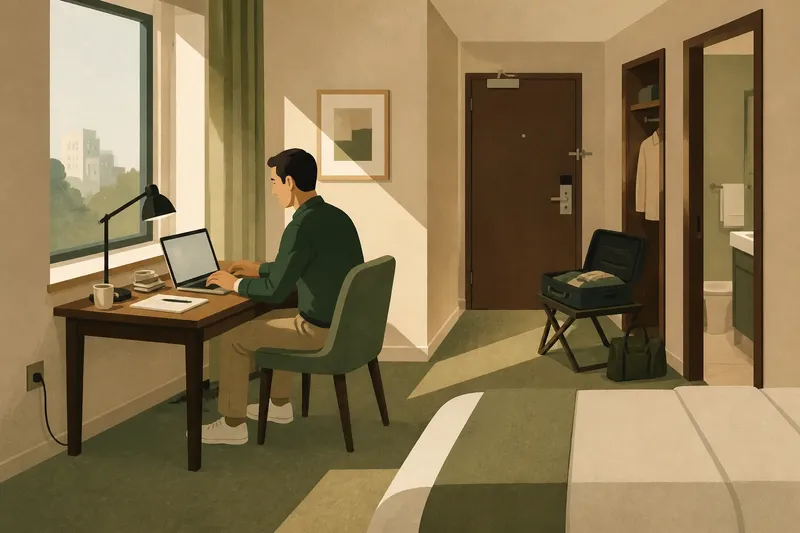
A hotel room desk by the window or near the door works best when it suits the light and leaves a clear route through the room. The view is a bonus; the chair’s position is less forgiving.
Say you arrive at a fictional city hotel with a laptop and papers. The room has a desk beneath a window, a door at the opposite end and a narrow path to the wardrobe and bathroom. You cannot alter the fixed furniture, but you can choose how to use the desk and where to place its chair. In this invented situation, that choice determines whether the room feels workable or merely furnished.
Check the room layout
Look at the desk from the doorway and the bed before opening the laptop. Note where daylight falls, how the chair moves, and whether the route to the wardrobe and bathroom remains clear. Check the lamp, curtains, sockets and any hotel instructions about moving furniture.
A desk beside a window can face pleasant daylight yet catch glare later. A desk near the entrance may separate work from sleep but sit in the busiest path through the room. Judge the actual layout at the hours you expect to work, rather than relying on a floor plan or the view from the desk.
- Observe whether direct sun lands on the desk or screen; if glare appears, then try a curtain or a changed screen angle, otherwise keep the window uncovered.
- Observe whether the pulled-out chair narrows the route to the bathroom; if it obstructs passage, then tuck it in or choose another desk position, otherwise leave the chair in its working position.
- Observe whether the door-side desk shares space with an open suitcase; if the two compete for the same floor area, then keep the desk by the window or close and relocate the luggage, otherwise the entrance position remains an option.
- Observe whether a lamp and accessible socket serve the desk; if either is missing or inconvenient, then ask hotel staff for help or use the other position, otherwise keep the arrangement.
- Observe whether the window brings noise or a draught; if either disrupts work, then close the window if appropriate or use the door-side position, otherwise retain the daylight.
- Observe whether the desk is fixed, heavy or difficult to move; if so, then leave it in place and ask staff about alternatives, otherwise move it only if the route and fixtures remain unobstructed.
Window desk light
Daylight can make paper reading comfortable and give a small room a less enclosed feel. Its usefulness depends on direction and timing. A bright window behind the screen can create reflections; a window behind the user can leave the screen in shadow.
Try turning the screen slightly, drawing a curtain partway or switching on the desk lamp. These adjustments preserve the window’s benefits without requiring a furniture move. If the desk becomes gloomy with the curtains drawn, or glare remains distracting, another position may be more practical.
In the fictional room, soft morning light gives way to afternoon sun across the laptop. The guest draws one curtain panel and angles the screen away from the bright patch. The expected result is a readable screen while some daylight and the view remain; if glare persists, the guest can ask staff whether a different position is available.
Door-side desk traffic
A desk near the entrance can put work farther from the bed and make it easier to leave papers at the other end of the room. That separation is useful only if the chair does not obstruct the entrance, wardrobe or bathroom route.
Think about the room with the chair pulled out and belongings in place, not just when it is tidy. A suitcase, luggage stand and chair can quickly claim the same narrow strip of floor. If the entrance area is broad and the window zone cramped, the door-side position may still be the better fit.
In the invented room, the guest considers moving the desk to the entrance. The open suitcase and pulled-out chair would occupy the same passage, so the guest keeps the desk by the window and places the work bag on the luggage stand. The observable result is an open route without giving up the desk’s useful morning light.
Work and rest boundaries
A desk in view from the bed can make work feel present after the laptop is closed. Keep papers together, put the laptop in its sleeve and push the chair in when you stop. This modest reset reduces visual clutter, although furniture cannot create a firm boundary by itself.
A door-side desk can keep work materials farther from the bed, but late screen light or keyboard noise may still disturb someone sharing the room. Agree on a routine if needed; position helps, but courtesy does the remaining work.
Which desk position fits?
Is a window desk better for laptop work?
It can be, if daylight is comfortable and the screen avoids strong reflections. Check it at the time you expect to work, since morning light may differ from afternoon light.
Does a desk near the entrance create more separation?
It may put work farther from the bed and make it easier to leave papers at the other end of the room. Check that an occupied chair leaves the entrance, wardrobe and bathroom route clear.
Should I move the hotel desk?
Move only a freestanding desk that can be shifted without obstructing a route or disturbing fixtures. If it is heavy, attached or difficult to assess, ask hotel staff rather than improvising.
What if both positions have drawbacks?
Choose the position that leaves the clearest passage, then use the curtain, lamp or chair to address the smaller inconvenience. A clear route is generally more useful than a perfect view.
Choose the workable spot
For the fictional guest, the window desk remains the better choice after the light and chair clearance are checked. The curtain softens the afternoon glare, the laptop turns away from the bright patch, and the work bag stays by the entrance. The expected result is a useful desk and an unobstructed route, though the guest would ask staff for another arrangement if the glare or traffic proved hard to manage.
When choosing a hotel room desk by the window or near the door, check the light during your working hours and picture the chair pulled out with your belongings in place. Curtains and screen angle can address some discomfort; a blocked route is harder to resolve without moving furniture. If both positions seem equally suitable, let the clearer passage decide.