A Late Arrival, Made Less Rushed
A calm late hotel arrival starts with accessible essentials and a quick room check, so you can settle in without unpacking everything before bed.
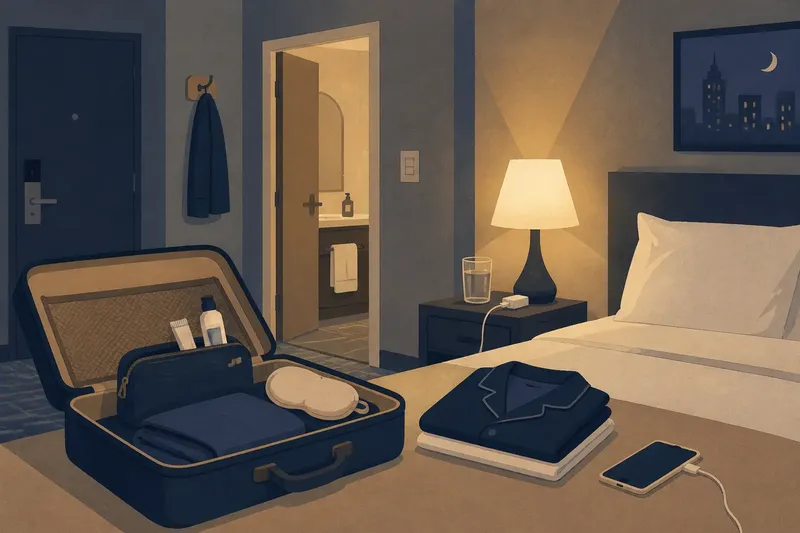
A late hotel arrival goes more smoothly when you treat the first few minutes as a landing, not an unpacking session. Keep the items you need before bed close to hand, check the room’s basic layout, then leave the rest of your luggage closed until morning.
There is no single right way to settle in. A traveller with an early departure may want a short, practical routine; someone arriving after a long journey may prefer to do almost nothing beyond getting comfortable. The useful choice is the one that meets tonight’s needs without turning a tired arrival into a small domestic project.
Choose your landing style
Three approaches cover most late arrivals. They differ in how much you do before bed, not in how thoroughly you have prepared for the stay.
- The essentials-only landing: Take out only what you need for the night and the next morning. This suits guests who are tired, staying briefly or travelling with a bag that opens easily.
- The morning-ready landing: Set aside tomorrow’s clothes and anything needed for an early start, then stop. Choose it if you have a meeting, a train or another reason not to rummage through your luggage at dawn.
- The light-unpack landing: Put a few frequently used items in a drawer or on a shelf, but leave most belongings packed. It suits a longer stay when you want the room to feel usable without committing to a full unpack after a late journey.
For most guests, the first or second option is enough. The third can be useful when the room will be home for several nights, but it need not happen on arrival. A closed suitcase is a perfectly respectable piece of furniture until morning.
Prepare before travel
Make the first useful items accessible while packing. Put sleepwear, a wash bag, a phone charger and any regular medication in a top compartment or a separate small pouch. If you expect to arrive late, keep the pouch somewhere you can reach without emptying the case onto the bed.
Keep your booking details and any arrival instructions available on your phone, along with a way to contact the hotel if your plans change. A screenshot can be handy when you expect patchy reception. If the property has asked you to confirm a late arrival or gives specific check-in arrangements, follow those directions before setting off.
A small amount of separation helps. Put items for the night in one pouch, and things that can wait in another part of the luggage. That is not a packing system requiring labels and colour coding; it is simply a way to avoid conducting a full search while standing under unfamiliar lighting.
Use the first room check
Once inside, pause before opening the suitcase. Put your bag somewhere stable and clear of the doorway, then take a moment to understand the room. Find the bathroom, the main light switch, the bedside light and the place where you can charge your phone. Notice where the curtains close and where you can put a glass or bottle of water.
This quick orientation is about comfort, not inspection. You are learning enough to move around without switching on every light or searching through drawers later. If a control is unclear, look for a label or ask the hotel rather than guessing. For anything affecting safety or a room feature, follow the hotel’s instructions and contact staff if you need help.
Say you arrive late with a small case and an early appointment. You take out your wash bag, sleepwear, charger and the clothes you plan to wear, then locate the bathroom and bedside light. The rest stays packed; in the morning, you can dress without disturbing the room or searching for a clean shirt.
Keep unpacking modest
Unpacking has a way of expanding to fill whatever energy remains. Resist the urge to empty the whole case simply because there is a wardrobe. For one night, taking out sleepwear and tomorrow’s clothes may be sufficient. For a longer stay, you can decide in daylight which belongings are worth placing on a shelf.
Do not spread essentials across the room. Keep your phone, charger and room key together in a place you can find again, and leave the route between the bed and bathroom clear. If you have a medication routine, keep the relevant item where you normally expect to find it, while observing its storage instructions.
There is also no need to solve the room’s storage puzzle straight away. A drawer may be convenient, but a closed bag is easier to manage if you have only just arrived or plan to leave early. Choose the arrangement that makes the next few hours simple, rather than the one that looks most settled.
Which arrival suits you?
What should I unpack for one night?
Take out what you need to sleep, wash and get dressed, plus any regular essentials that should remain accessible. Leave the rest packed unless you have a particular reason to reach it.
What if I have an early departure?
Use the morning-ready approach: set out clothes and group your travel essentials before bed. Keep the door route clear and put items you must not forget somewhere visible but secure.
Should I call the hotel if I will arrive late?
Check the booking information for the property’s late-arrival arrangements and contact the hotel if your expected arrival falls outside them or your timing changes substantially. Clear communication is more useful than hoping the desk can infer your schedule.
When should I unpack properly?
Decide after you have slept and can see how much space you need. For a longer stay, unpack only the belongings you expect to use; for a short visit, keeping the case closed may be simpler.
Make the choice
Choose essentials-only if the room is a brief stop or you are too tired to do more. Choose morning-ready if tomorrow begins early. Choose light-unpack if you expect to stay several nights and want a few things within easy reach. The choice can change with the trip; it is not a pledge to one method.
A calm late hotel arrival depends less on a tidy room than on a short, sensible sequence: reach the things you need, learn the room’s basic layout, and postpone decisions that can wait. Before turning in, check that your phone is charging and that the items needed for the morning are where you expect them to be. Then let the suitcase remain a suitcase until you have had some sleep.